TATE DINING | 召禾设计 | 2026 | 中国香港
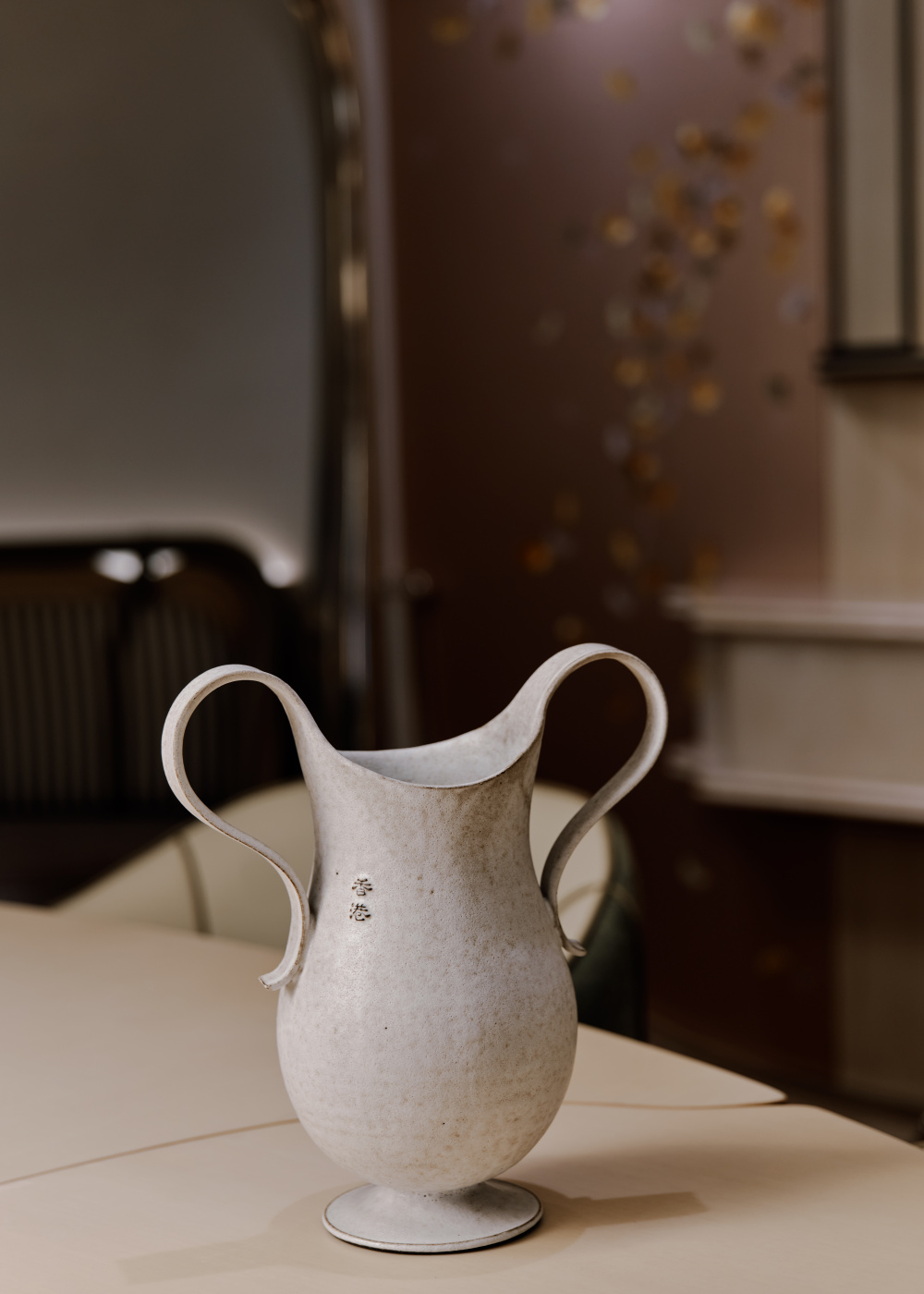
Tate is rooted in Chef Vicky Lau’s distinct philosophy: a culinary approach shaped by precision, sensitivity, and storytelling. Before becoming a chef, Vicky trained as a ceramic artist, and that early relationship to material, form, and craft became an important point of connection for the design. The making of ceramics and the making of cuisine share a similar discipline: both require patience, intuition, control, and an understanding of how something delicate can still carry strength.
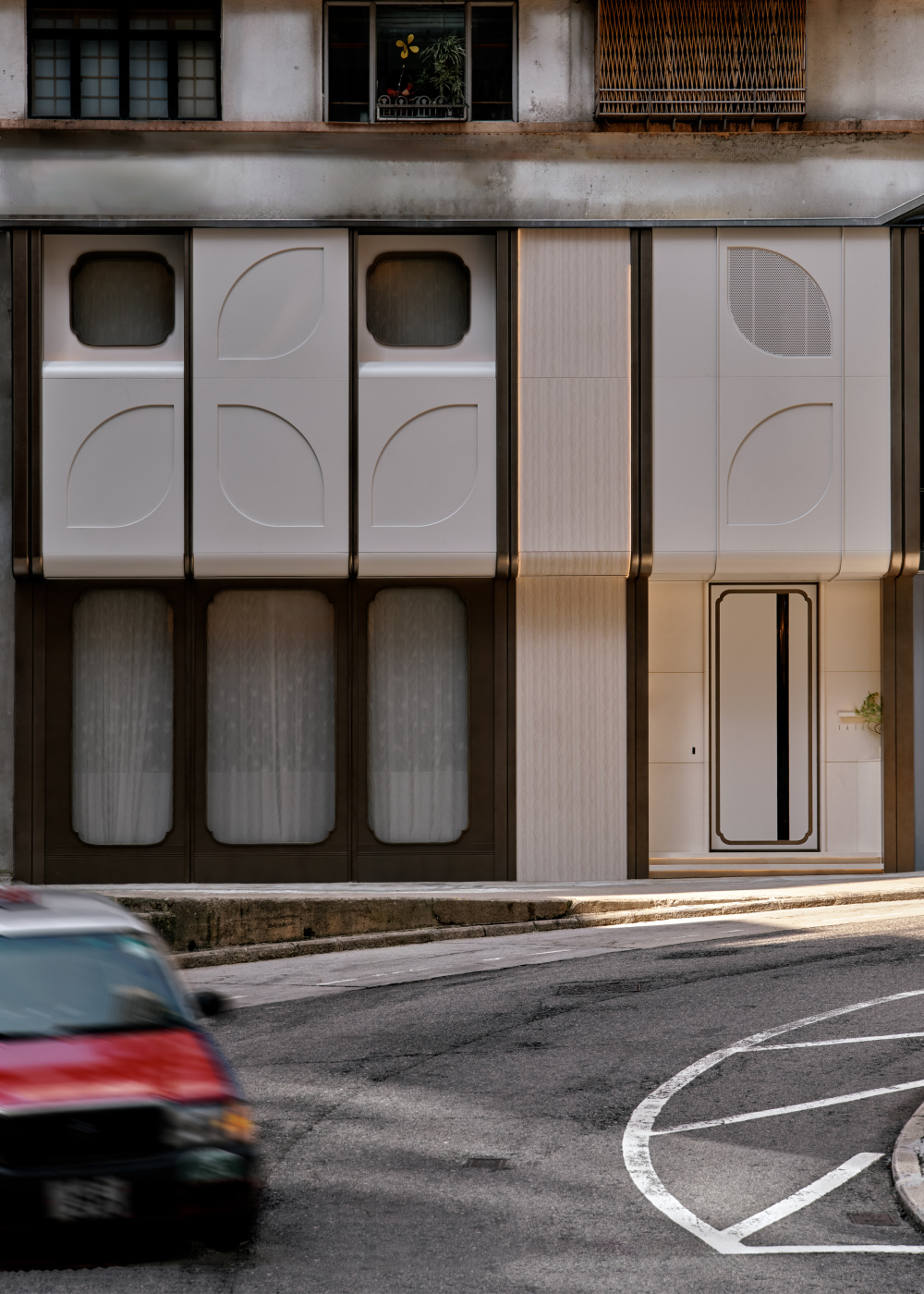
For Tate 3.0, the design reflects an evolution in Vicky’s own creative language. Her cooking has become more confident, fluent, and effortless over time, and the space was developed with that same sense of maturity. Rather than treating the interior as a decorative backdrop, the design was conceived as a vessel for the dining experience — a space that supports the ritual of the meal and reflects the same level of care found in the cuisine itself.
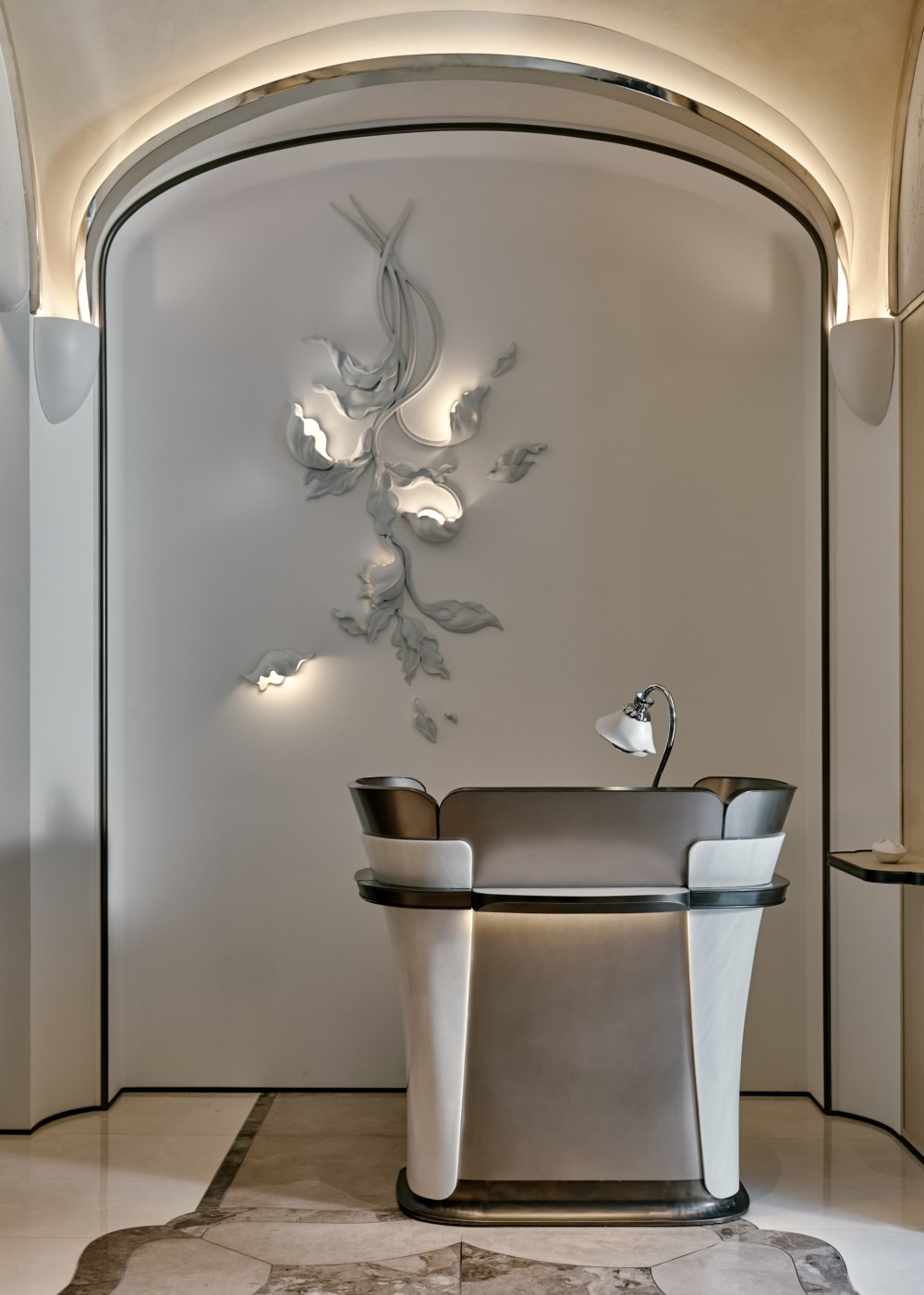
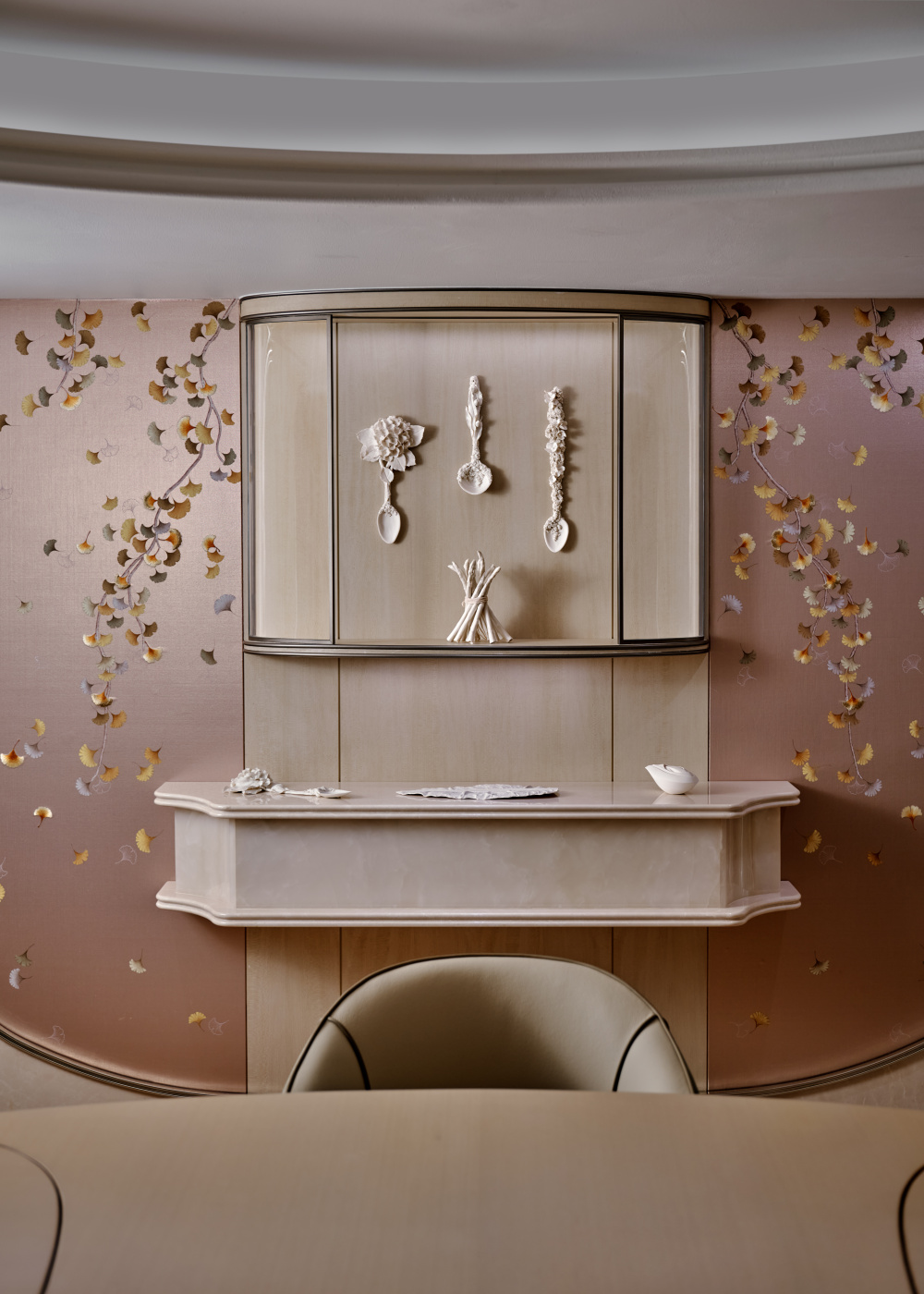
Inspired by Chef Lau’s perspective as a female chef and artist, the design explores a balance between softness, discipline, and beauty. Fine china became the central symbol of this idea. Both delicate and enduring, ornamental yet functional, porcelain offered a language through which the interiors could express femininity without sentimentality. Its associations with craft, dining, ceremony, and domestic ritual were translated into the architecture of the space in subtle and layered ways.
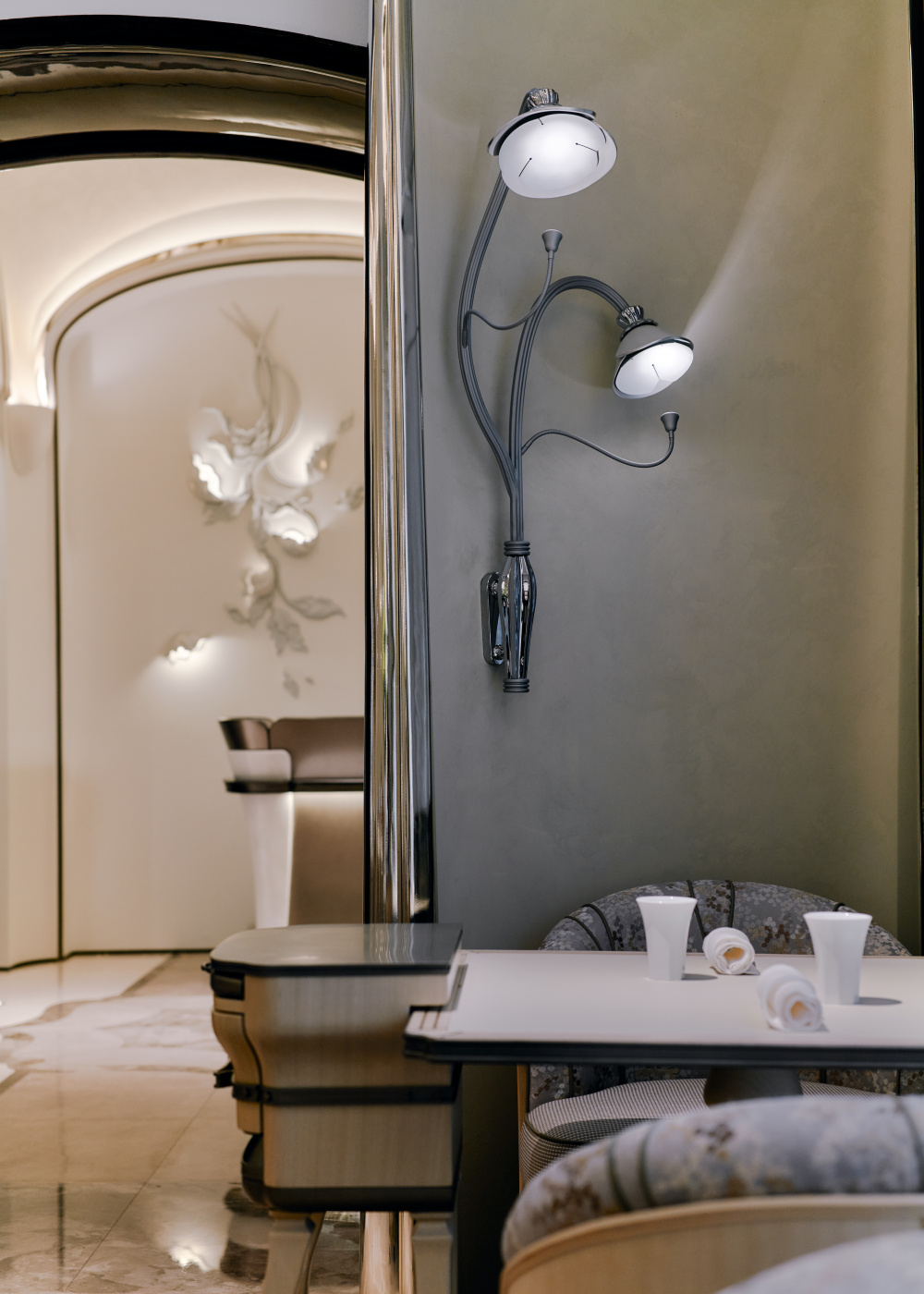
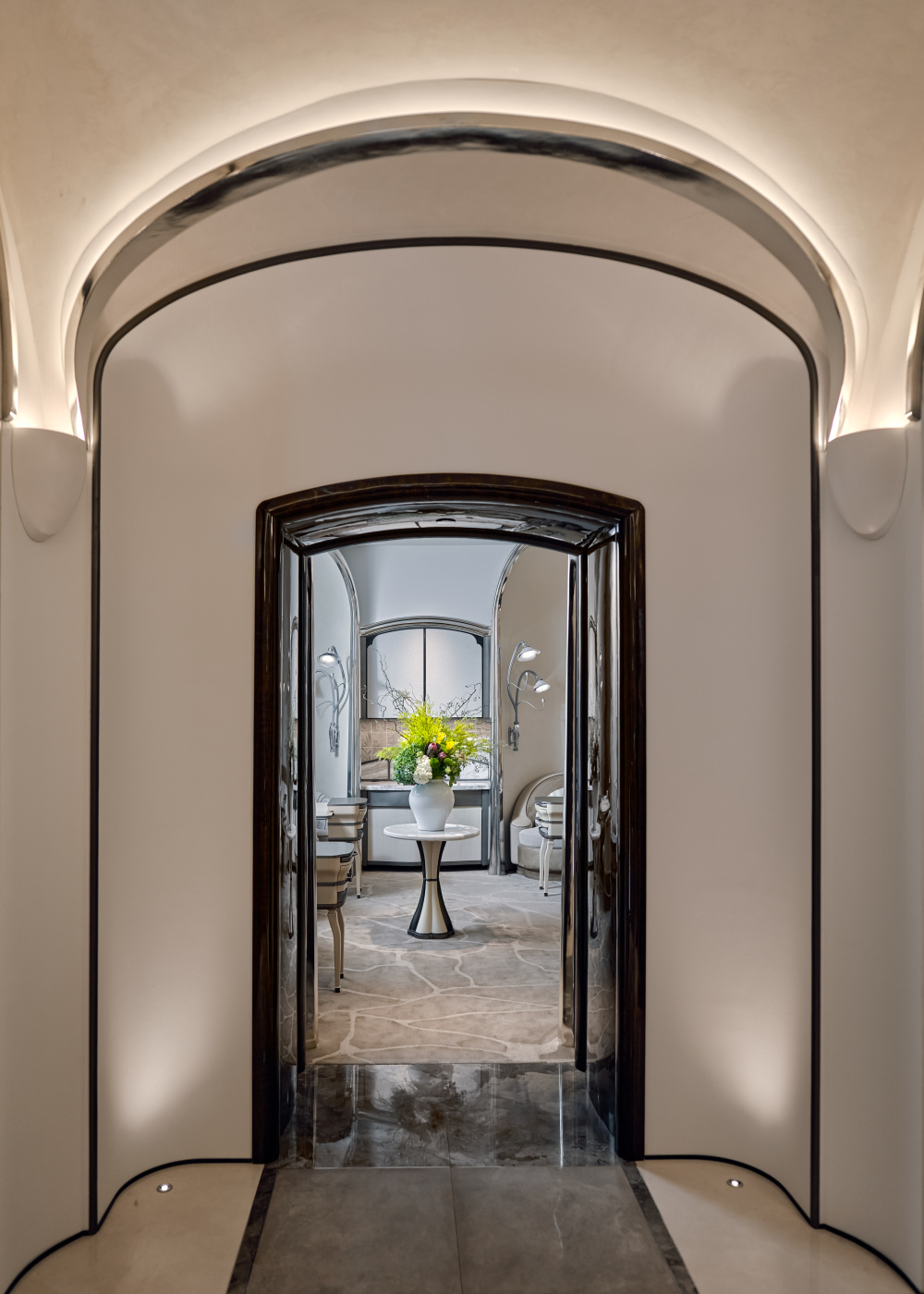
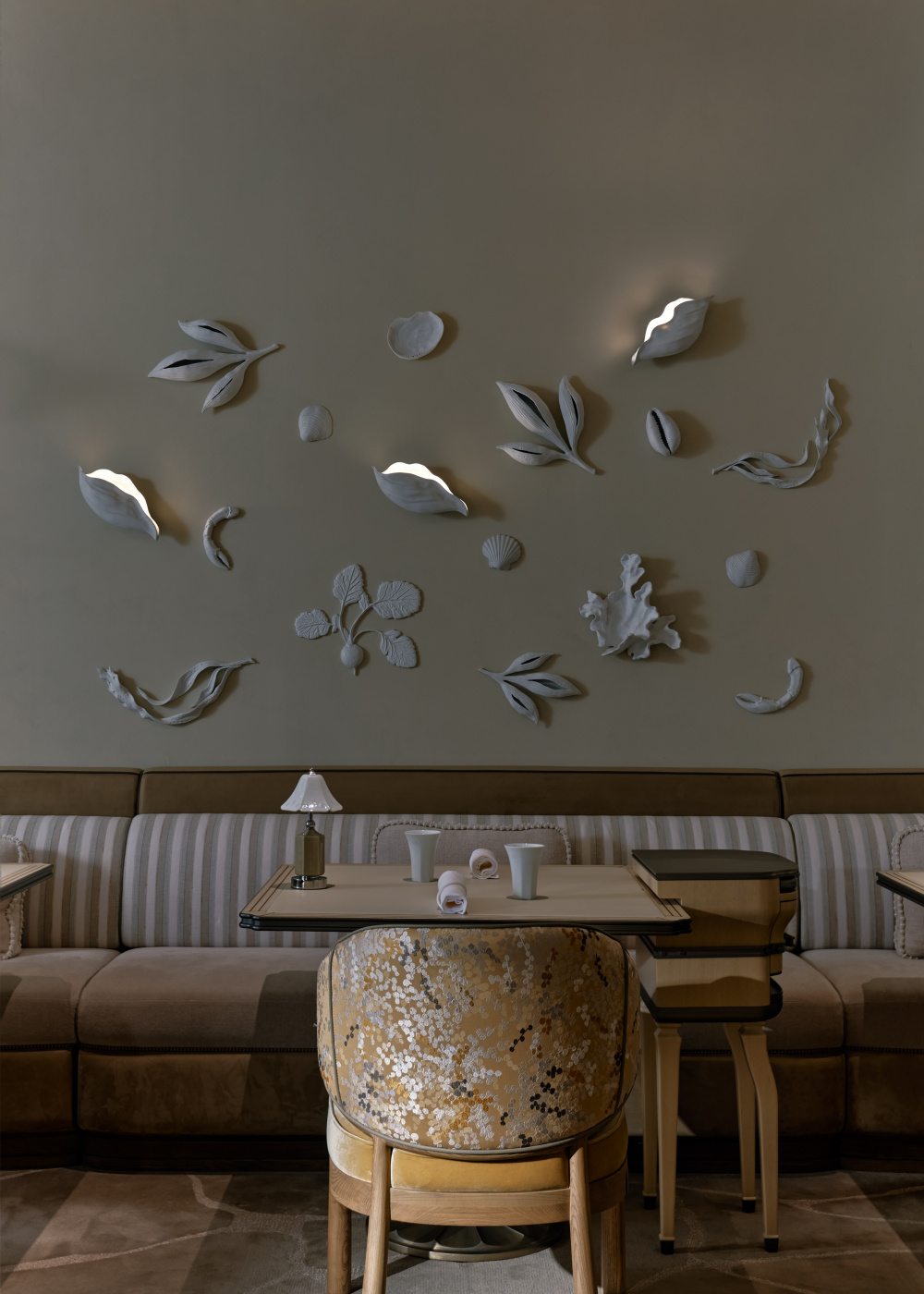
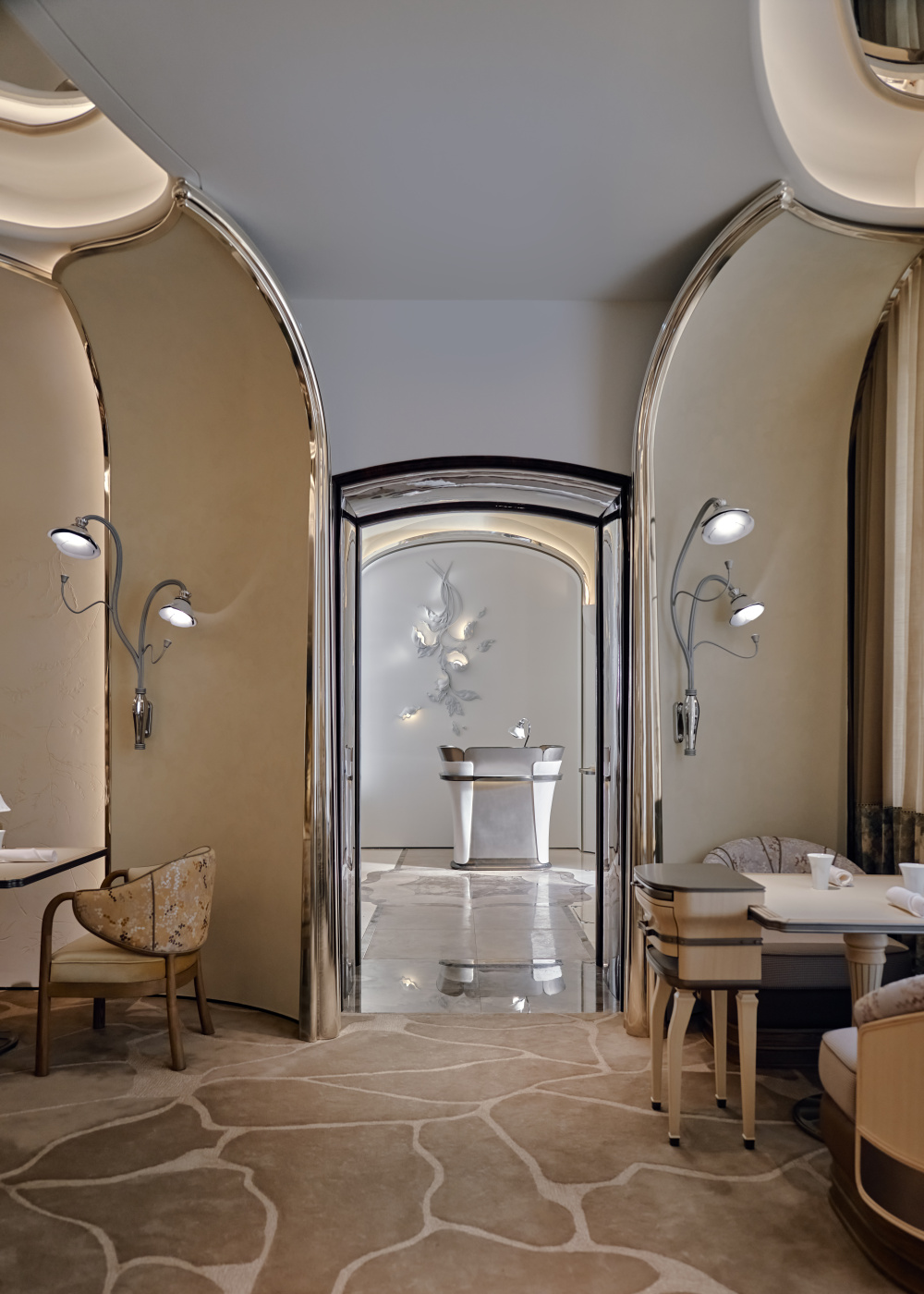
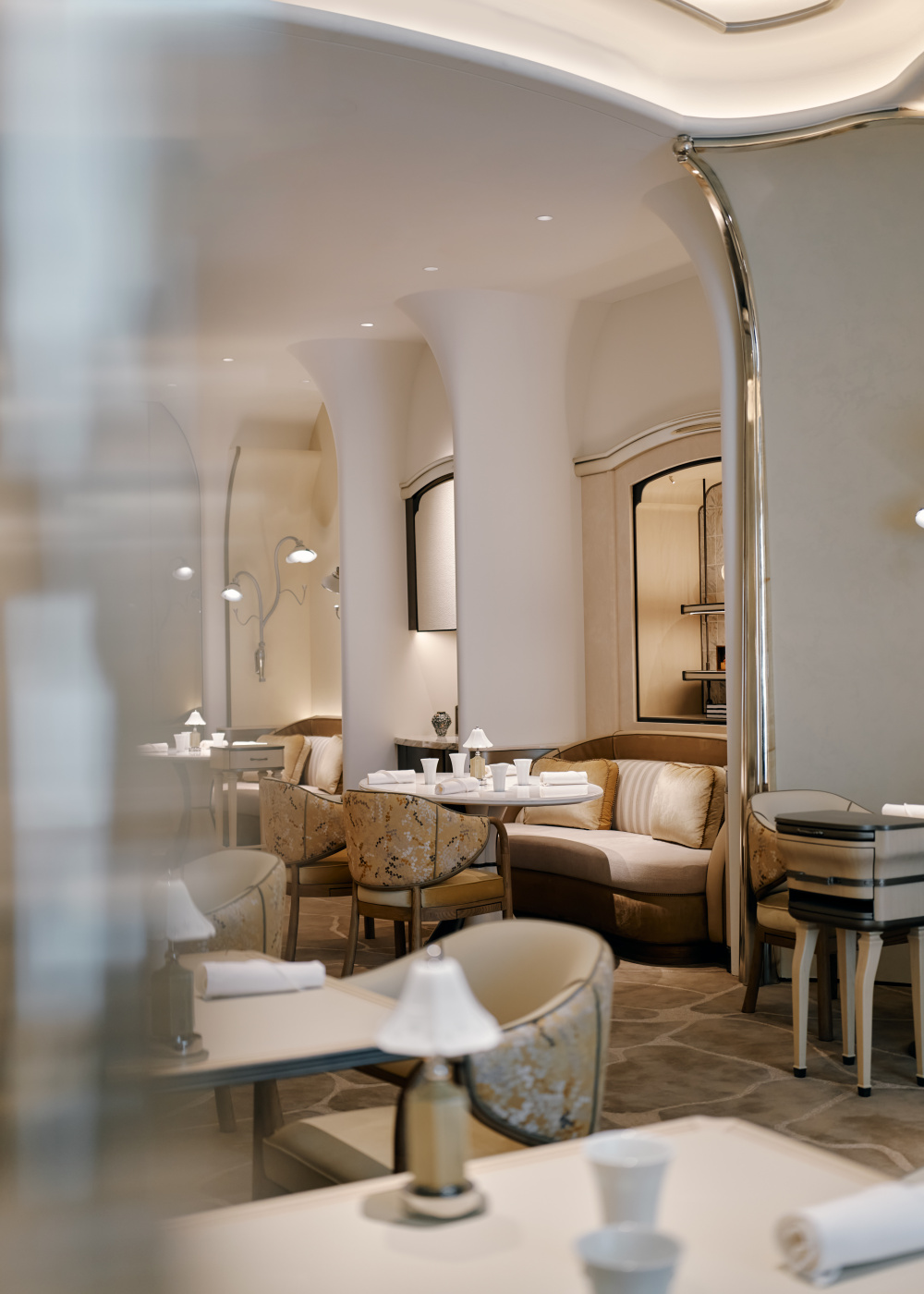
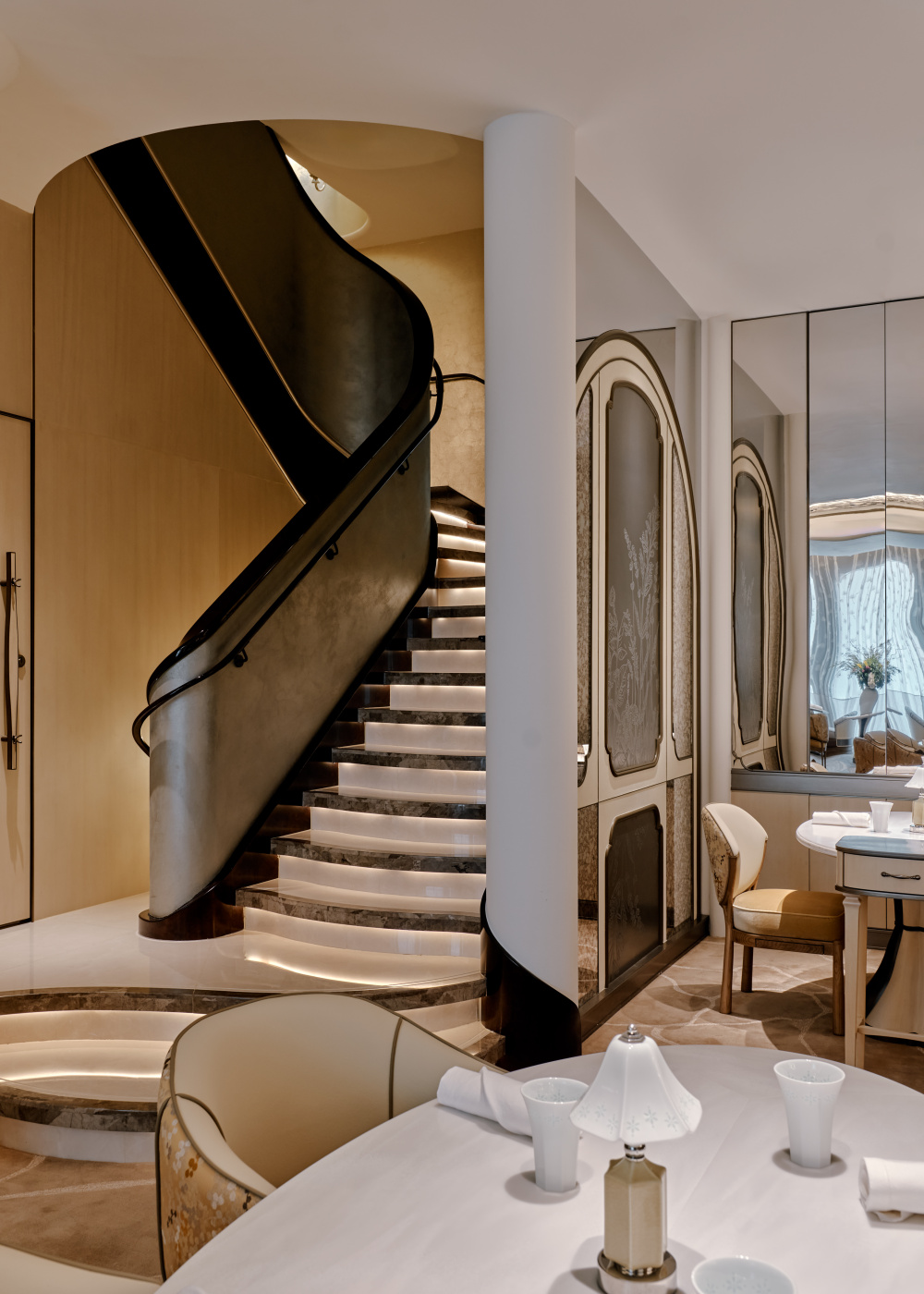
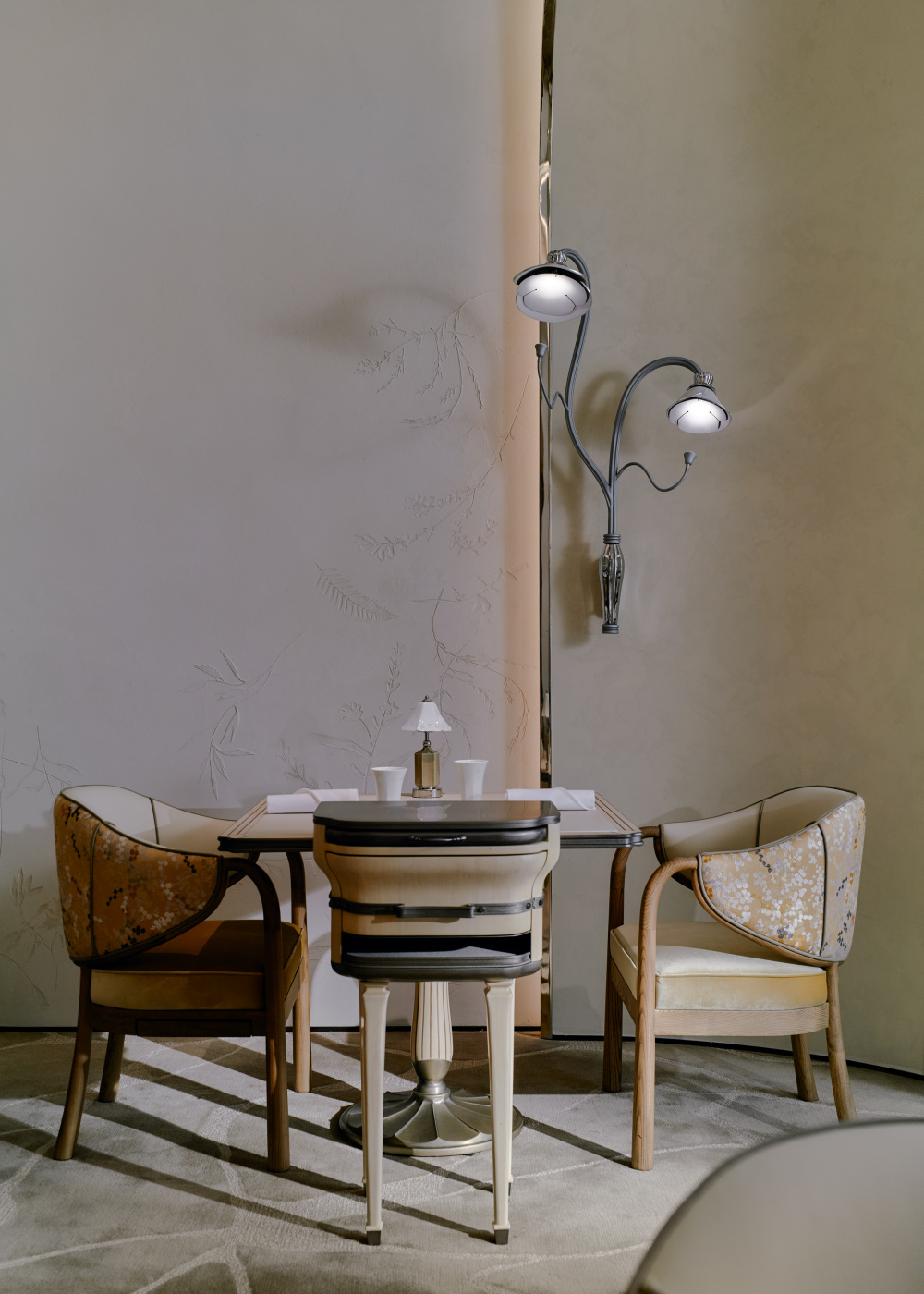
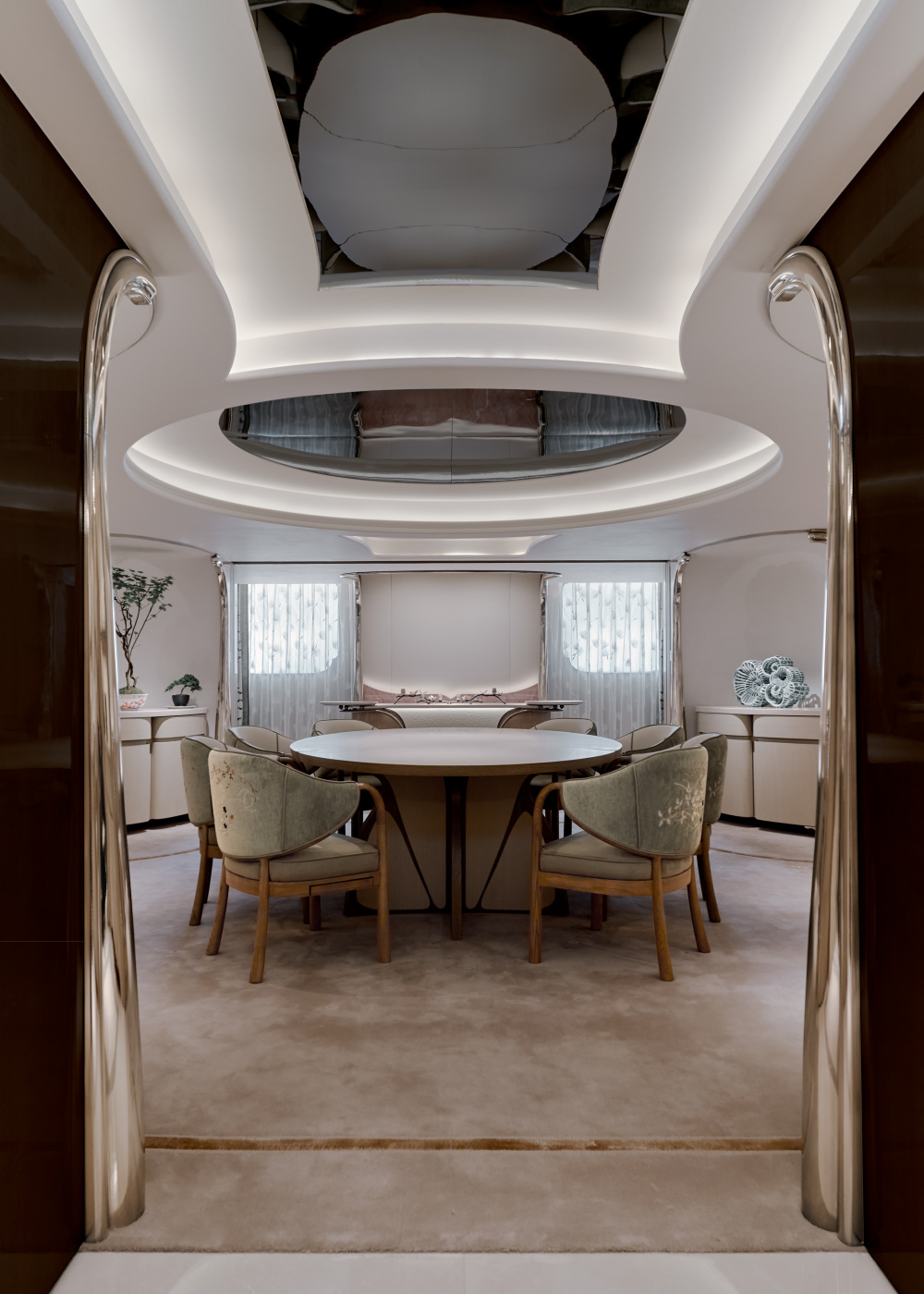
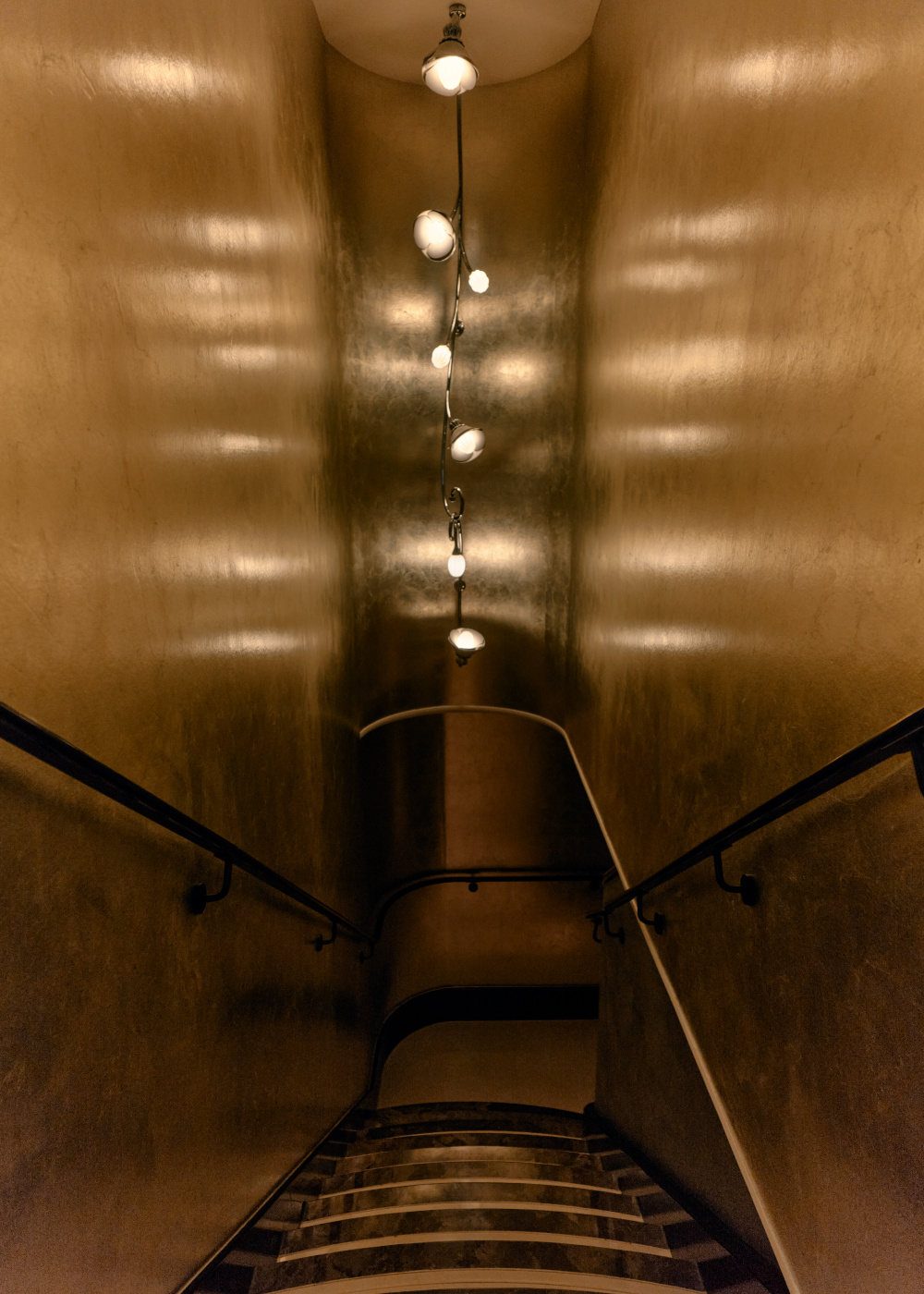
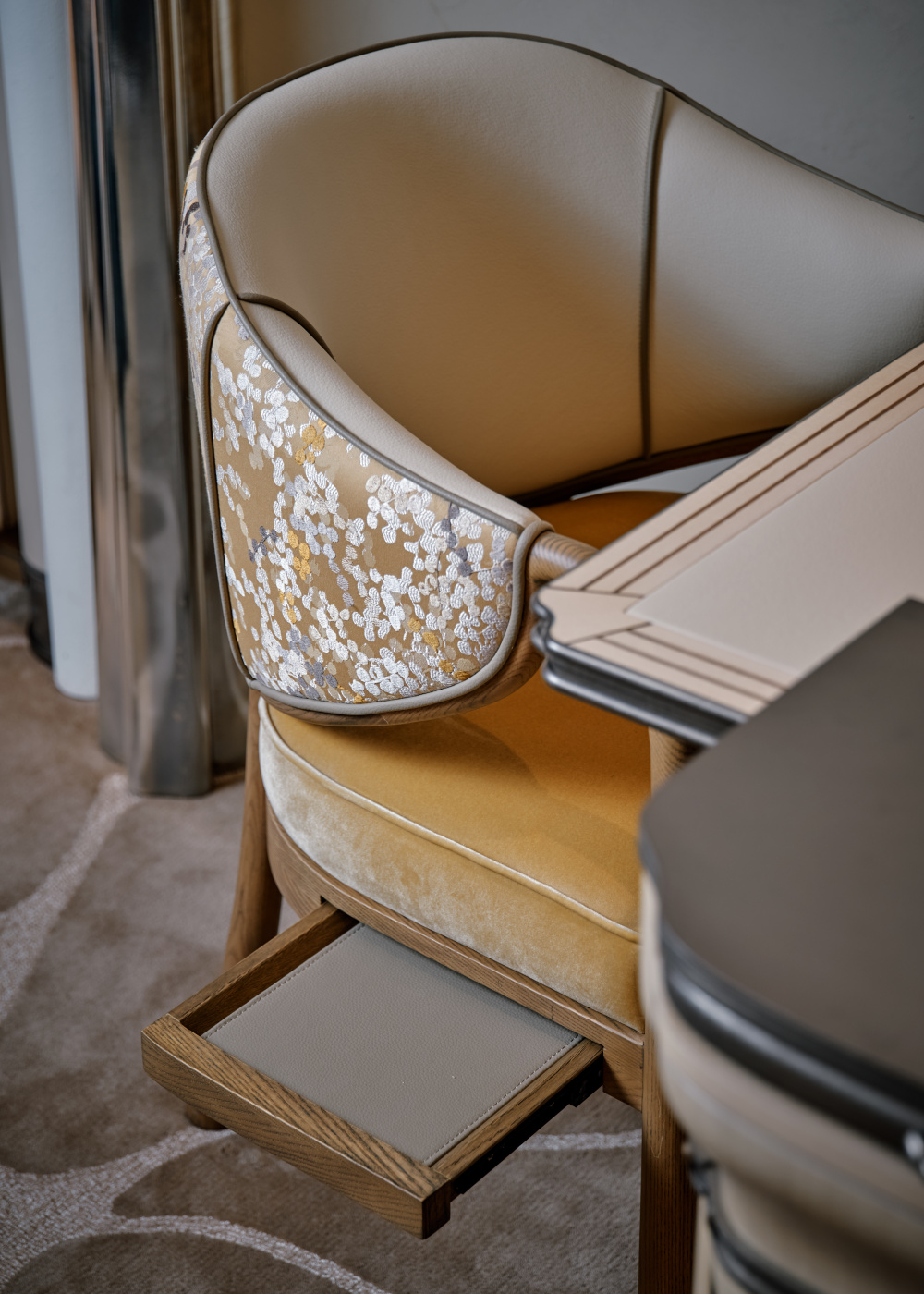
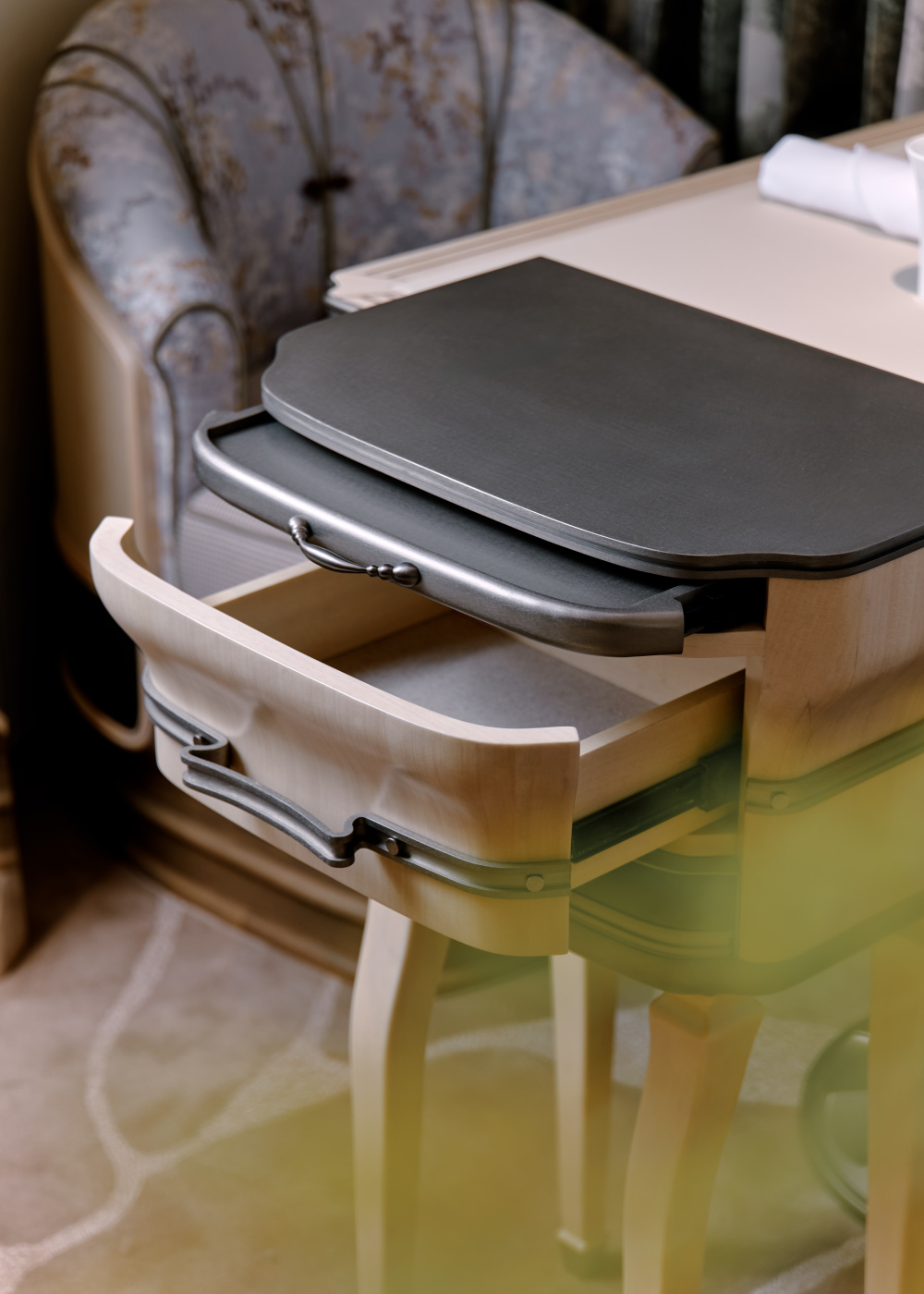
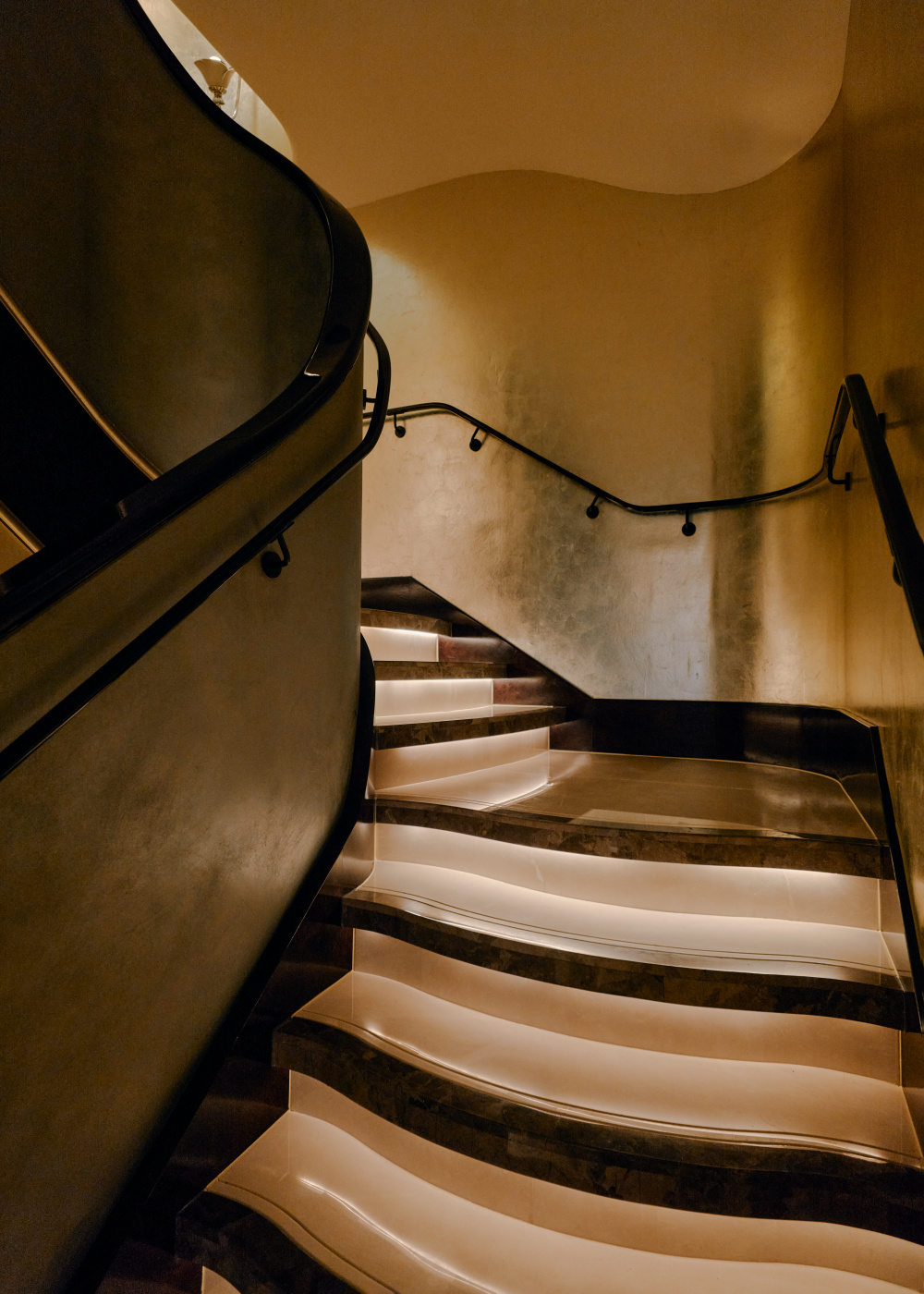
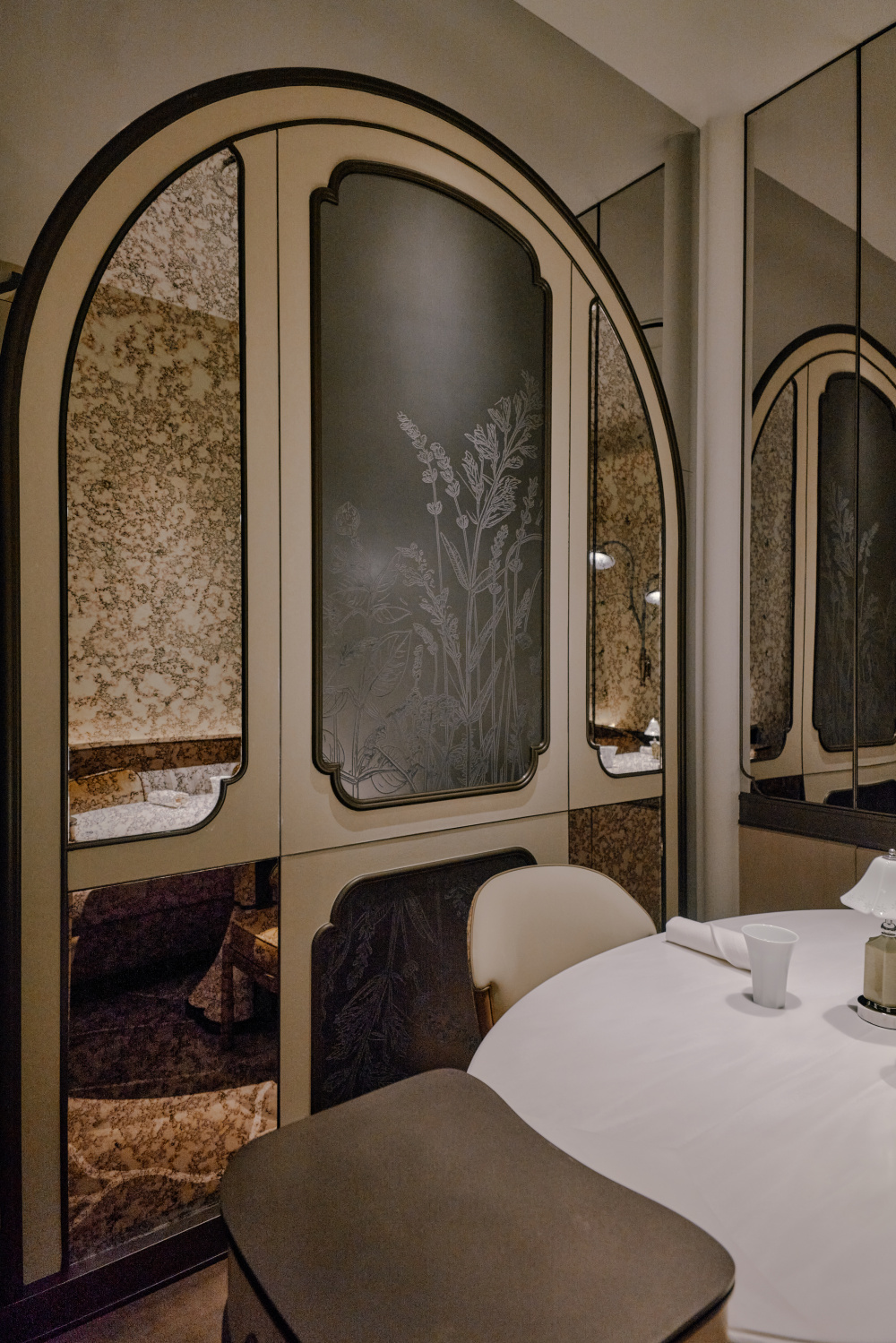
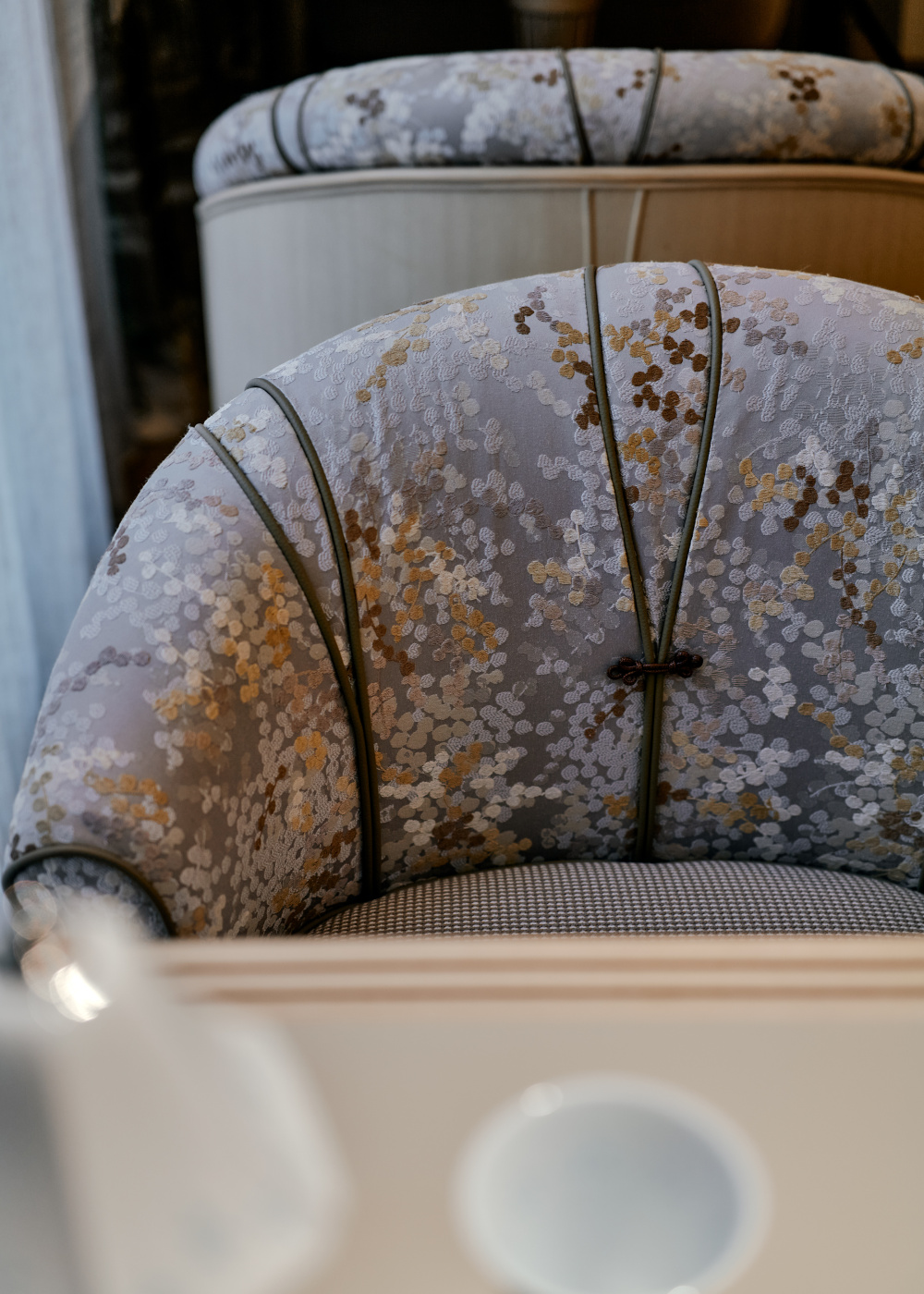
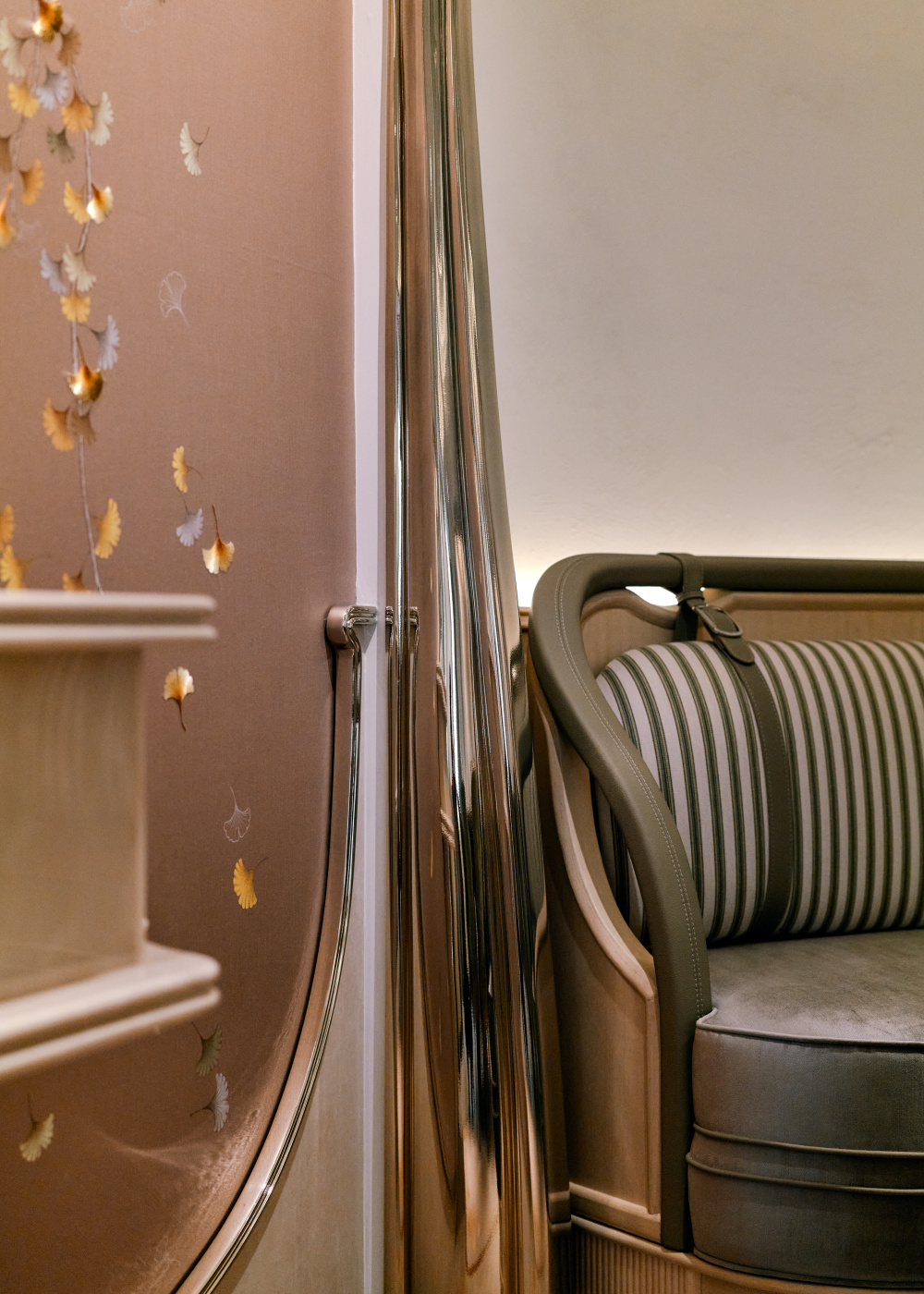
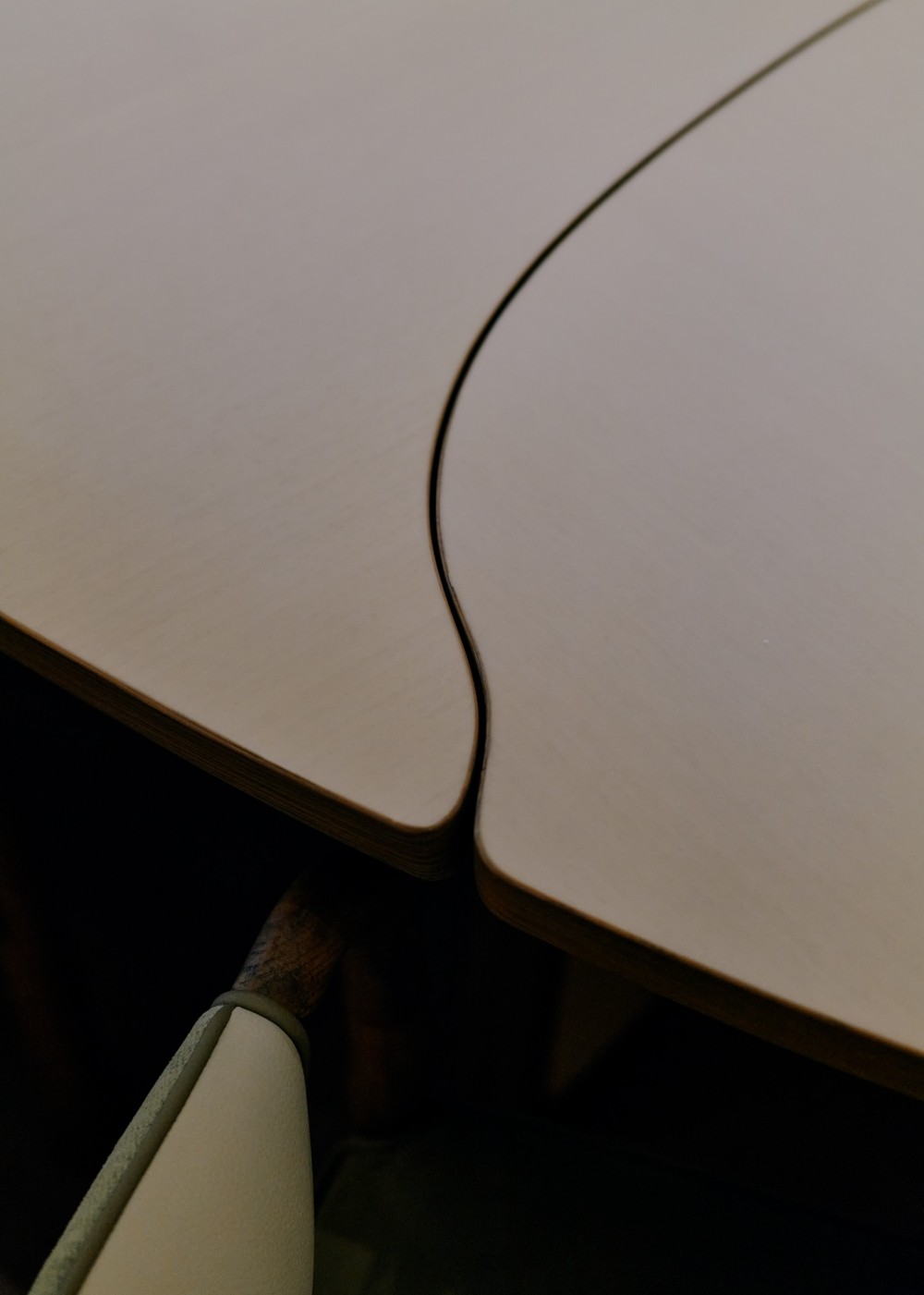
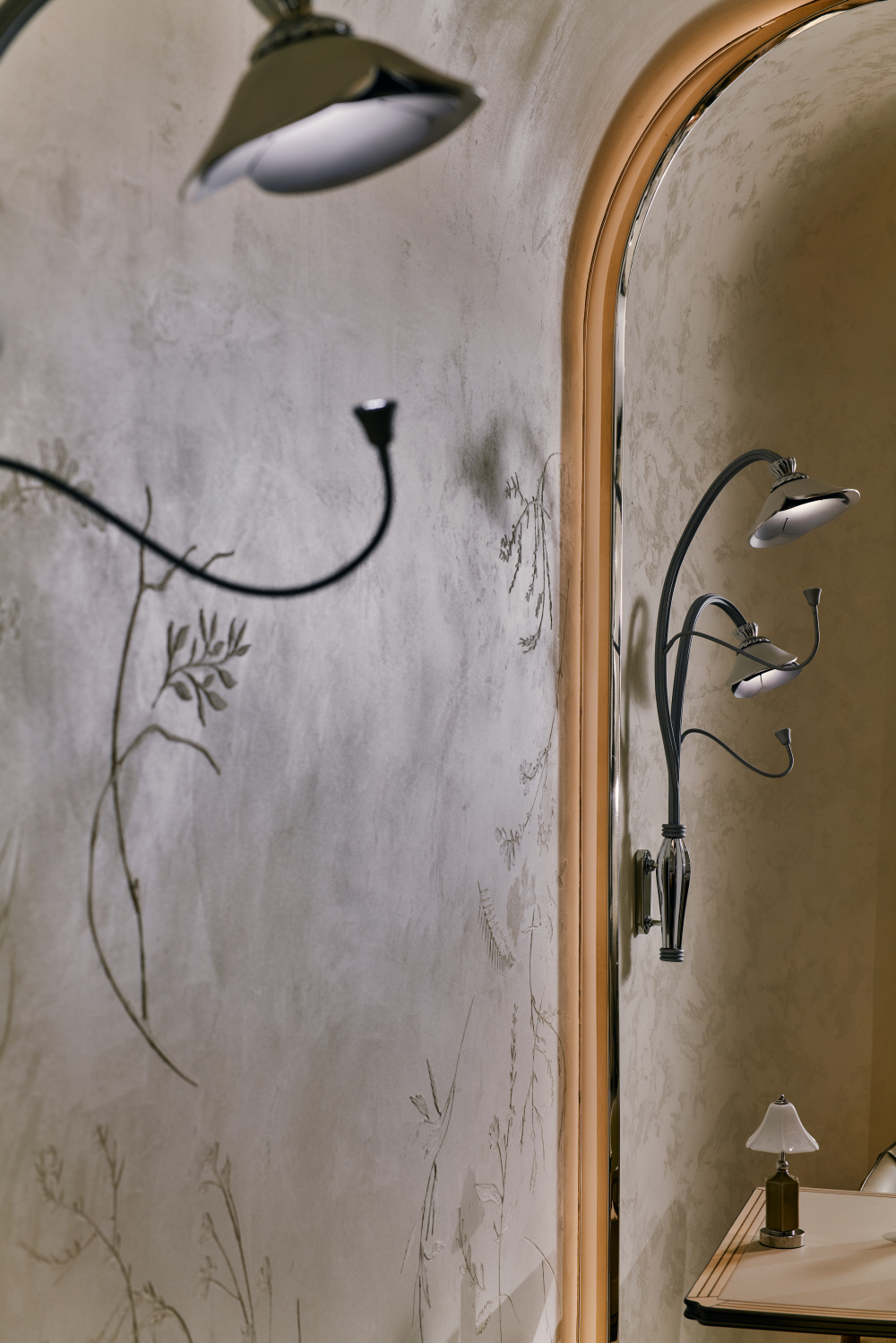
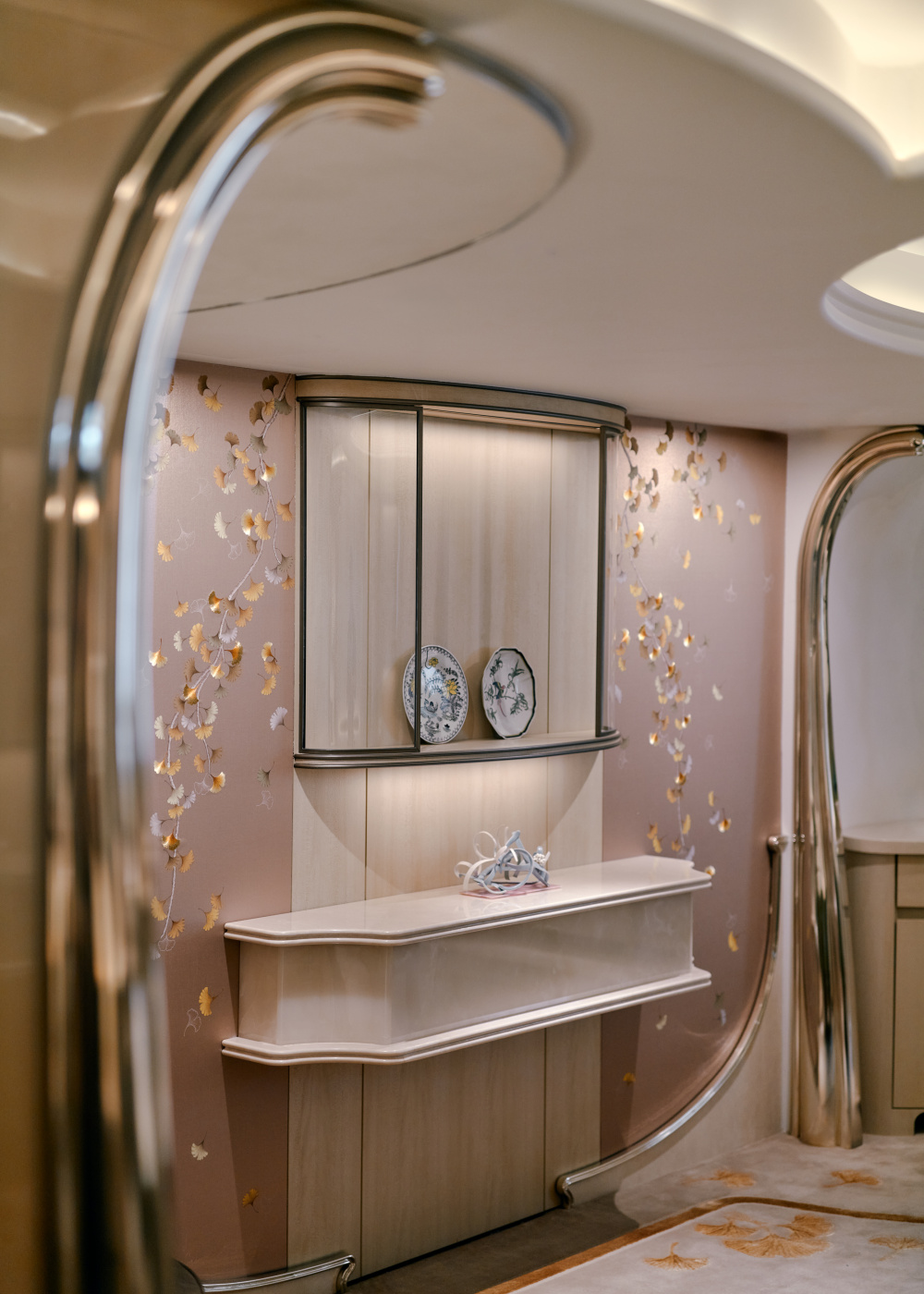
Throughout the restaurant, references to fine china and ceramic vessels appear through pattern, form, light, and material detail. Flooring patterns draw from porcelain motifs, abstracting familiar decorative references into a more architectural expression. In the main dining room, ceramic lighting installations are integrated into the walls, giving the space a handcrafted quality while creating a soft, intimate atmosphere. Custom furniture pieces also borrow from the curves and profiles of ceramic objects, connecting the act of dining to the vessel, the table, and the room itself.
The furniture was developed not only as an aesthetic extension of the concept, but as part of the choreography of service. Many pieces were designed around the rituals of dining and presentation, allowing the food to remain the focus while creating moments of intimacy, function, and discovery. Details such as integrated service elements and carefully considered lighting reinforce the relationship between the cuisine and the environment, ensuring that the interiors enhance the meal without competing with it.
In this way, Tate becomes more than a beautiful dining room. It is a carefully crafted world around Chef Vicky Lau’s cuisine — one shaped by softness, tension, precision, and memory. Every detail is intended to hold the experience, creating a space where food, craft, and atmosphere are deeply connected.
TATE DINING
Project - Hospitality
2026 - HONGKONG
|
|